


 Windsor in deal to tap into county’s reclaimed water
STORY BY JON PINE (Week of April 16, 2026)
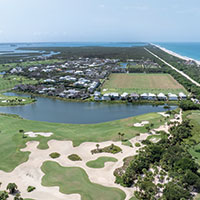
Windsor Club has reached an agreement with Indian River County to accept up to 1 million gallons of reclaimed water per day to irrigate its golf course, polo field and residential neighborhoods, becoming the latest barrier island community to tap into the county’s irrigation water system.
Disney’s Vero Beach Resort, Sea Oaks Beach & Tennis Club, Bermuda Club and Orchid Island Golf & Beach Club are other island users of reclaimed water from the county’s central wastewater treatment system.
Talks about bringing Windsor onto the system began in March 2023, according to Sean Lieske, county director of utility services. “This is the culmination of those discussions,” Lieske said.
The 10-year agreement was approved by Board of County Commissioners in late March and goes into effect Sept. 1. Windsor has agreed to pay 34 cents per 1,000 gallons for the water, which will pour approximately $124,100 into the county’s coffers each year.
It’s a win-win for both parties, Lieske said. Windsor gets better irrigation water than it is currently drawing from wells on the island, which tends to be saltier. Besides a little extra revenue, the deal moves the county closer to fulfilling the terms of its Consumptive Use Permit with the St. Johns River Water Management District – which requires the county to make use of 75 percent of its reclaimed water by 2032.
Currently, the county utilizes only about 70 percent of its reclaimed water, said Richard Meckes, assistant director of utilities services for the county. A permit from the Florida Department of Environmental Protection allows the county to discharge the remaining 30 percent of its reclaimed water into the North Relief Canal.
County wastewater goes through a series of treatment processes to remove organic material along with most nitrogen and phosphorus, Meckes said. Then it goes through a disinfection process. While it is not pure enough to drink, the water is monitored regularly to ensure that it is safe to release into the environment, according to Meckes.
The treated water is collected and stored in a 3-million-gallon water tank at the county’s Hobart water production facility near 77th Street and 58th Avenue before being piped to island and mainland communities. The storage tank was added to the utilities system in 2012.
Windsor will pay to extend the county’s supply line, which ends about a quarter mile south of the community, Lieske said. Windsor is also 100 percent responsible for its own irrigation equipment and for any construction necessary to begin using the reclaimed water, he added.
Representatives for Windsor declined to comment for this story, but according to the county, the 10-year agreement will be automatically renewed for an additional 10 years, unless Windsor cancels the agreement at least 180 days before it expires. Windsor also can terminate the agreement before the deadline providing it gives two years’ advance notice in writing.
John’s Island made a similar deal last year to have the City of Vero Beach pipe in around 3 million gallons of water per day for irrigation. That water is drawn from the main relief canal near the Vero Beach Airport and is treated before being pumped to John’s Island. The pipeline was completed last November and is now fully operational. JI pays 50 cents per thousand gallons.
Both projects reduce the amount of nitrogen-laden water that eventually empties into the Indian River Lagoon, where the chemicals wreak ecological havoc, feeding algae blooms that block sunlight from reaching seagrass beds that provide food for manatees, sea turtles and dozens of other marine animals in the lagoon.
Talks are ongoing with other communities that are considering buying reclaimed water from the county, Lieske said.
“In addition to getting a way better product for irrigation, switching to reclaimed water reduces the total amount that is being pulled from the aquifer,” Meckes said. Indian River County Utilities draws all its water from the Floridan aquifer, a massive series of natural reservoirs 2,000 feet underground that extend over 100,000 square miles beneath Florida and parts of Alabama, Georgia and South Carolina.
St. Johns River Water Management District joined the South Florida and Southwest Florida Water Management District in 2011 to form the Central Florida Water Initiative, which works with state agencies, water utilities, agricultural and environmental groups, and others, to monitor water resources to ensure the state has enough fresh water to supply current residents and support anticipated growth.
As the population in Florida continues to expand, demand for clean, fresh water grows along with it. Daily withdrawals from the Floridan aquifer now exceed more than 4 billion gallons, according to Southwest Florida Water Management District estimates.
As fresh water is depleted in the aquifer, salty, brackish water that is much more difficult and expensive to treat can seep in. Water districts police cities, counties and other water-consuming entities to make sure they don’t withdraw too much fresh water.