


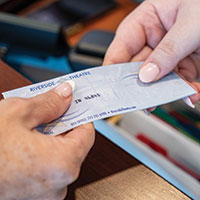
 High-tech ticket scalpers plague Riverside, other artistic venues
STORY BY PIETER VANBENNEKOM (Week of January 29, 2025)
The term “ticket scalping” conjures up images of seedy-looking characters hanging out near sports arenas in big cities offering tickets to supposedly sold-out games at inflated prices, trying to make quick cash deals away from the prying eyes of stadium security and police.
But ticket scalping today has moved upscale and gone high-tech. In recent months, the phenomenon has gotten out of hand in Vero, plaguing Riverside Theatre and other artistic venues around town.
The shifty characters lurking in the shadows outside the theater or arena have been replaced by IT professionals operating from far away who are well versed in the modern science of SEO – Search Engine Optimization – creating websites that look like the sites of artistic organizations and performance venues and manipulating search engines like Google so that their bogus sites pop up ahead of the legitimate ones.
Some third-party sellers have gone so far as to copy Riverside’s seat map to convince ticket-buyers that they are buying official tickets, said Peyton Snarey, Riverside guest services manager.
“As a result, patrons arrive expecting great seats, only to find that they are actually seated in the back rows of the upper balcony,” Snarey added.
“It’s true that it has been a problem for many years and it’s not unique to Vero Beach, either, as it has been going on nationwide,” says Oscar Sales, Riverside Theatre marketing director. “But we have seen it much more frequently here in recent months.”
The issue has become problematic enough that Riverside Theatre took the unusual step last month of sending an email blast to all its regular patrons, warning them to purchase their tickets directly through the venue’s official websites, RiversideTheatre.com or MyRiversideTheatre.com. The message urged patrons to bookmark those URLs into their favorite browsers.
The message warned would-be theatergoers to avoid the websites of third-party ticket sellers such as Go Tickets, Ticket Center and all the others that show up in search results.
“These companies buy tickets from us and then resell them to you at steep markups – sometimes as high as 200 percent above face value,” the message said. “To avoid overpaying, always purchase your tickets directly through our official websites.”
Sales said resale ticket prices often are exorbitant, with some tickets going for as much as $250.
In a follow-up interview with Vero Beach 32963, Sales strongly rejected the notion that the theater doesn’t really mind the resales because the third parties help them sell more tickets.
“To us, it’s all about giving our patrons a great experience, from the moment they buy their tickets, to the time they enter the theater and get escorted to their seats by our ushers, and, finally, when they hopefully enjoy the show,” Sales said. “If they find out they’ve overpaid, it’s not a good experience for them and they may not come back.”
What the third-party sellers are doing may not be illegal – although an almost-never enforced Florida law prohibits reselling tickets at more than $1 above list price – but Sales said the tactics they use are “sneaky” and misleading.
“As a result, people are being duped,” Sales added.
Sales said the theater is doing everything it can to warn its regular patrons not to buy from third-party sellers, but it is hard to alert “people who are new in town or are considering coming to the theater for the first time and may not be familiar [enough] with our official websites to recognize them in what pops up on their computer searches. We are trying to make everyone aware.”
MusicWorks, which stages musical concerts at the Emerson Center and other area venues, has also been hit recently by a wave of third-party ticket sellers.
“We have had MANY complaints this year from people who have accidentally purchased from sites like Vividseats,” said Stacey Young, MusicWorks president.“It appears that when people Google musicworksconcerts.com, the first thing that comes up is a third-party seller. We have begun to include a warning on all our emails to only purchase through our site and our system.
“Also, disconcertingly, when the tickets that the third party has purchased are all sold out, the next customer gets a message that tickets are no longer on sale for the event and then we lose a sale because they think it’s sold out [when it isn’t],” Young added.
“They are doing it for every show,” Young said. “That’s unacceptable.”
Adam Schnell, artistic director and CEO of Ballet Vero Beach, said there are too many third-party sellers active in the field to nail down exactly who’s doing it, but it has happened to his organization, too.
However, Schnell said he wants to stress that the issue is not with the official websites of the artistic enterprises offering top-flight entertainment in Vero Beach. “Our website is absolutely secure,” Schnell said. “We use the gold standard for credit card processing and security. These third-party sites are purchasing the tickets from us all and reselling them, but our websites [are perfectly safe to use].”
Deceptive resellers are doing “a great disservice to many nonprofits working to help keep prices affordable,” said Jon R. Moses, Riverside executive producer and CEO.
Staff Writer Mary Schenkel contributed to this report.